2 min read
Each year on 26 July, International Day for the Conservation of the Mangrove Ecosystem by UNESCO recognises the importance of mangroves and the need to protect these unique coastal ecosystems.
Established in 2015, the day raises awareness of the ecological value of mangroves and the growing pressures they face globally. UNESCO notes that mangroves are disappearing three to five times faster than overall global forest losses, with significant ecological and socio-economic impacts.
In Australia, mangrove forests cover around 0.9 million hectares and include 41 species across 19 plant families. More than half of the world’s mangrove species are found in Australia, making these ecosystems an important part of our coastal and estuarine environments.
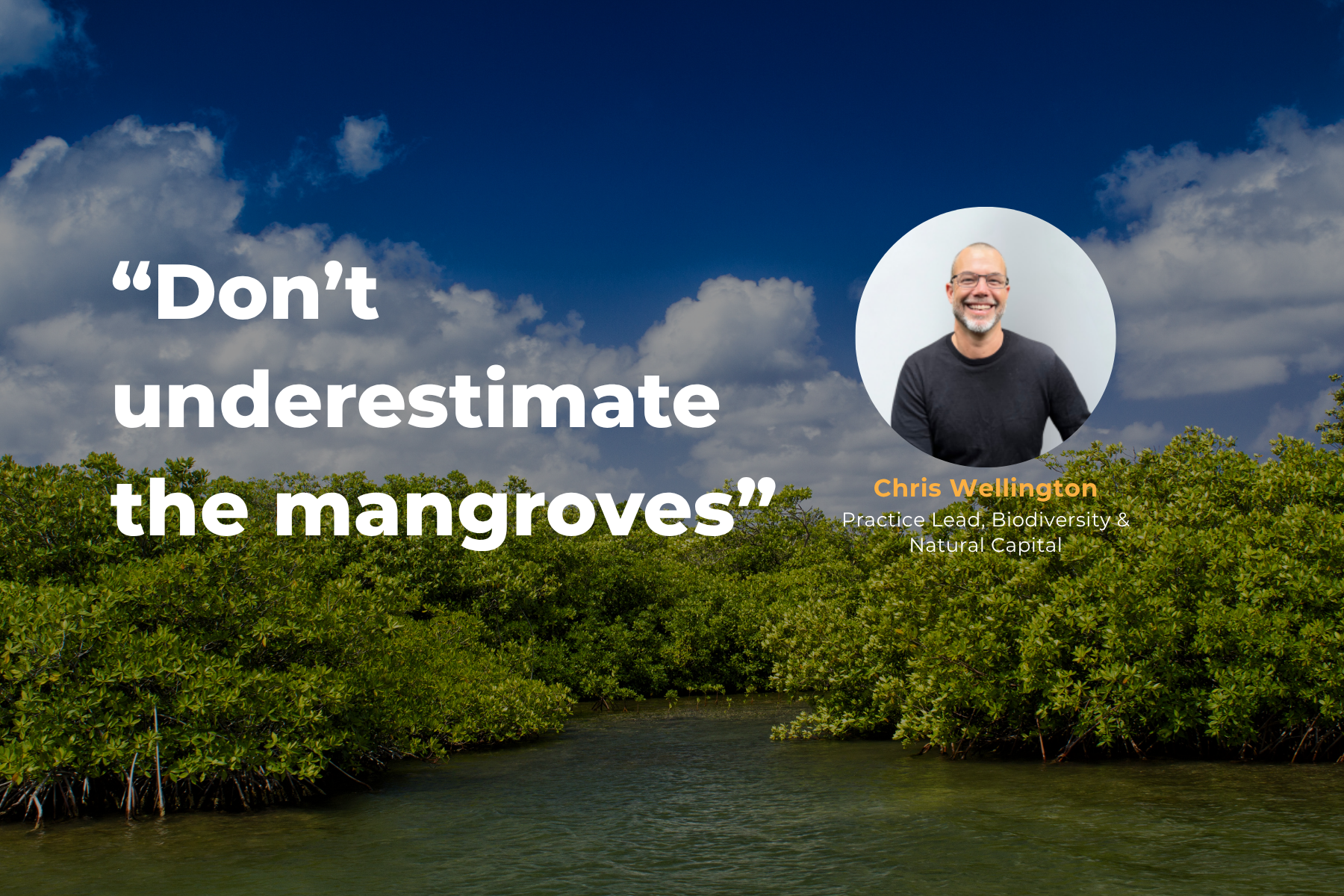
To mark the day, we spoke with Chris Wellington, WolfPeak’s Practice Lead for Biodiversity & Natural Capital, about why mangroves are often underestimated and what makes them so important to healthy waterways, biodiversity and coastal resilience.
An ecologist’s connection to coastal systems
For Chris, marine and aquatic ecology has long been a personal interest.
and I studied marine ecology as part of my Honours research. We can’t survive on this
planet without healthy oceans and waterways”
While Chris’ career has largely followed a terrestrial ecology pathway, his passion for aquatic and coastal ecosystems has remained.
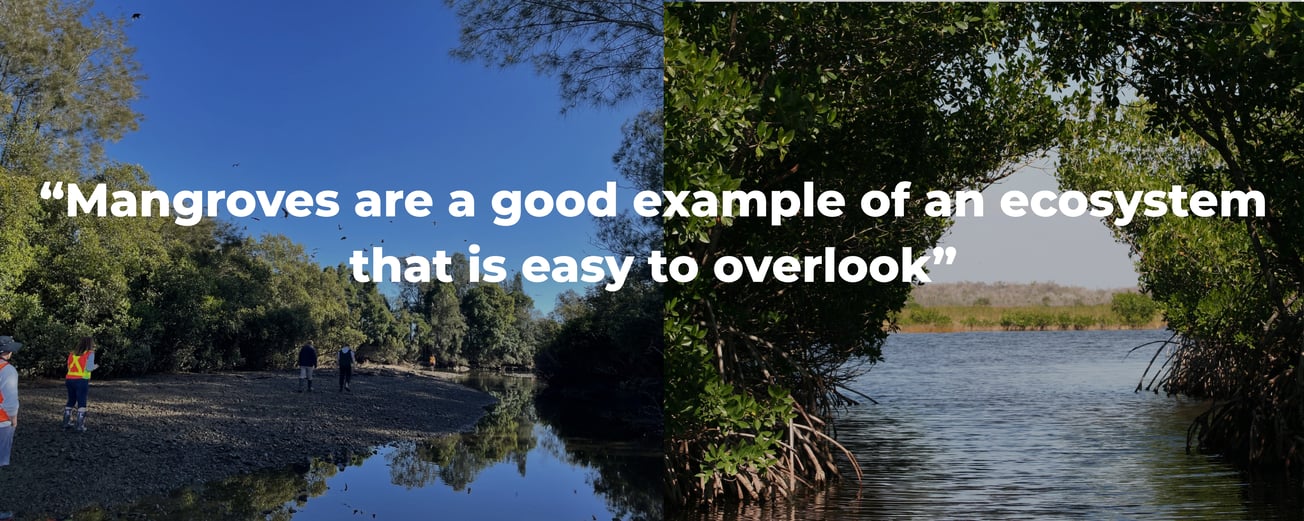
He says “mangroves are a good example of an ecosystem that is easy to overlook”
More than muddy shorelines
Mangroves occupy the transition zone between land and water, growing in intertidal environments where few other plants can survive. Their presence can be an important indicator of healthy coastal and estuarine systems.
They also do a lot of quiet heavy lifting.
Mangroves provide nursery habitat for fish and other aquatic species, support birds, crabs and invertebrates, stabilise shorelines, trap sediment and contribute to healthier waterways. In estuarine systems, they form part of the broader food web and provide habitat that many species rely on during different stages of their lifecycle.
Chris says one of the biggest misconceptions is that mangroves are simply muddy, messy or unpleasant places.
Why should infrastructure and development projects consider mangroves early?
Infrastructure and development projects near coastal, estuarine or waterway environments should consider mangroves early because impacts are not always direct or obvious.
Changes to runoff, sediment, hydrology, urban discharge, fertilisers, chemicals, boat wash, jetties, port works or construction activity can all affect the conditions mangroves need to survive.
For Chris, this is part of the issue. Mangroves do not exist in isolation. Their health is shaped by what happens across the broader catchment - including upstream land use, stormwater, runoff, sediment movement, construction activity and changes to water flow.
When catchments are treated as an afterthought, impacts can show up downstream in estuaries, foreshores and coastal ecosystems. This means mangroves need to be considered as part of a connected waterway system, not just as vegetation on the edge of a project site.
As Chris explained, mangroves can be sensitive indicators of the health of broader coastal and waterway systems. If mangroves are affected, it can point to changes in the surrounding environment - not just within the mangrove area itself.
That is why early ecological assessment, careful planning and good environmental management are important when working near estuaries, foreshores and connected waterways.
Connected ecosystems need connected thinking
Mangroves are also a reminder that biodiversity, water and infrastructure cannot be treated in isolation.
Healthy coastal ecosystems are connected to water quality, erosion control, climate resilience, cultural values and long-term environmental outcomes.
As part of Sequana, WolfPeak’s biodiversity, natural capital and environmental expertise connects with broader water, infrastructure and advisory capability. Together, this supports more integrated thinking across the systems that shape environmental outcomes - from ecosystems and waterways to project planning, delivery and long-term resilience.
This International Day for the Conservation of the Mangrove Ecosystem, we recognise the quiet but critical role mangroves play in supporting biodiversity, healthier waterways and more resilient coastal environments.
“Don’t underestimate the importance of mangroves.”